Exterior trades crew staffing founded 2025
The season starts in March. Your crew should be set by January.
Curbwise staffs the work between the curb and the front door — landscape and grounds, hardscape and masonry, tree and arbor, exterior surfaces, and the crew leads who run them. We place whole crews rather than one résumé at a time, and we build the bench in the months when that is still possible.
| Trade | Season | Crew shape |
|---|---|---|
| Landscape & grounds | Three to five, plus a working lead | |
| Hardscape & masonry | Two to four, weather permitting | |
| Tree & arbor | One climber, two on the ground | |
| Exterior surfaces | Two to three, ladders and lifts | |
| Irrigation | One or two. Backflow tester certification checked | |
| Snow & ice | On call, two-hour callout |
Why we work this way
A crew is not five résumés.
Exterior work is done by a unit. One person runs the mower line, one runs the trimmer, one blows and one hauls, and the whole thing either flows or it does not. Drop an unfamiliar body into that and the route takes longer than it would have with four.
Most staffing treats each of those four as a separate transaction, which is why a contractor can be fully staffed on paper in May and still be running behind.
A crew that has never worked together is slower on day one than a crew that is one person short.
So we place crews. Where we can, people who have already worked a route together. Where we cannot, a crew built around a lead who has, and who is paid to spend the first week making it a crew rather than four individuals in one truck.
The other half of the job is timing. By April every contractor in the metro is hiring the same people and nobody can afford to be choosy. We spend the winter talking to people who are not looking yet, so that in March there is a bench instead of a scramble.
The directory
Four trades, and the people who run them.
Residential, commercial grounds and property-management portfolios. Irrigation and snow sit in the chart above and are staffed the same way. Every title listed here is a role we fill.
-
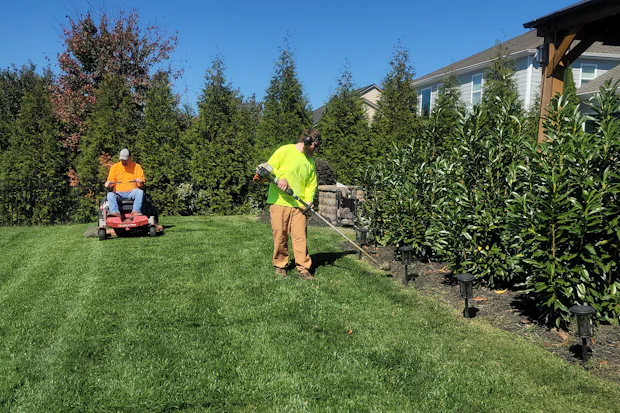
Landscape & grounds
Mow, trim, edge, blow, and the bed work that separates a property somebody maintains from a property somebody cuts. Pesticide application is a state license with categories, and we check which one a candidate actually holds rather than taking the word "licensed" at face value.
- Crew Member
- Mower Operator
- Bed & Detail
- Spray Tech
- Equipment Operator
-

Hardscape & masonry
Pavers, segmental walls, steps, flatwork and repair. Base preparation is where this trade is won or lost, so it is what we ask about first. Candidates with CMHA certification — the body ICPI and NCMA became — get asked what they have built, not just shown the card. Most good installers also carry a manufacturer's program, and that is worth more.
- Hardscape Installer
- Mason
- Finisher
- Skid Steer Operator
- Laborer
-
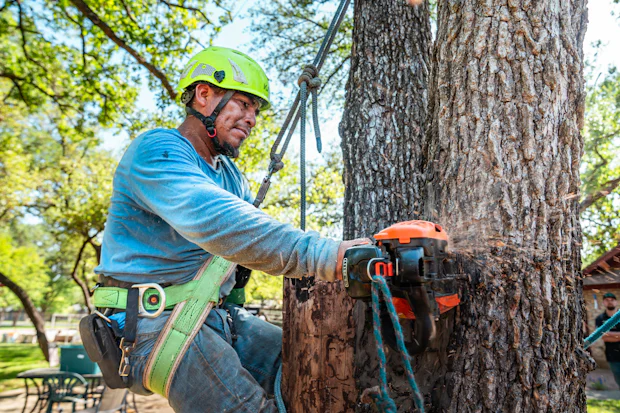
Tree & arbor
Climbers, bucket operators and ground crew. This is the most dangerous work on the page and the screening reflects that: we ask about ANSI Z133 practice, aerial rescue, and what somebody does when a limb does not go where they expected.
- Climbing Arborist
- Bucket Operator
- Groundsperson
- Chipper Operator
- Crane Spotter
-
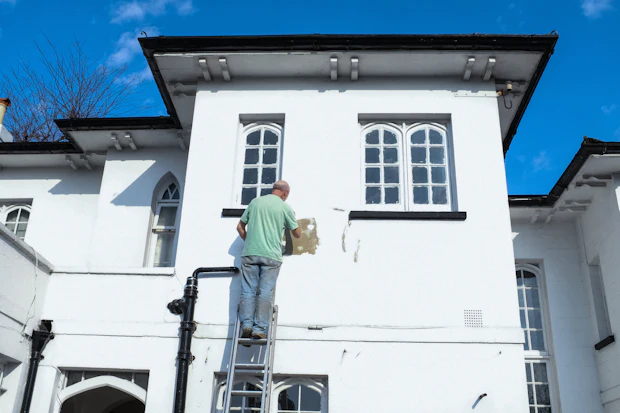
Exterior surfaces
Paint, stain, seal, wash and deck work. On a house built before 1978, disturbing more than twenty square feet of exterior paint brings the EPA's lead-safe rules with it — and RRP is a certification the firm holds, not a card the painter carries. We would rather have that conversation at intake than after an inspection.
- Exterior Painter
- Prep & Masking
- Pressure Wash Tech
- Deck & Fence Repair
-
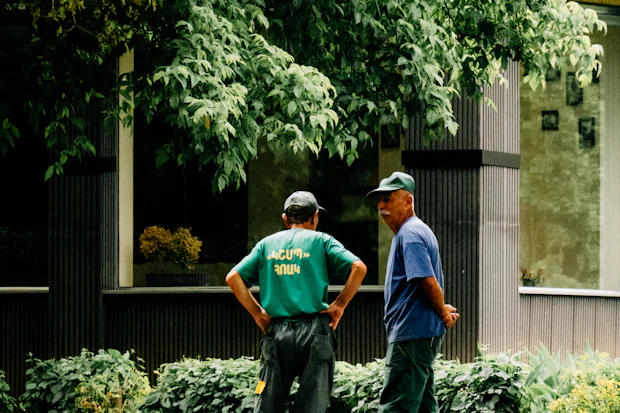
Crew leads & foremen
The single hardest hire in this industry, and the one that decides whether the other four work. A lead has to run a route, hold a standard, keep a truck legal and be the person a customer talks to. Most of the good ones are bilingual and are not being paid for it.
- Crew Lead
- Foreman
- Account Manager
- Branch Operations
- Dispatcher

Somebody set every one of those by hand, on a Tuesday, in August.
For contractors
You are hiring in February for work that starts in March.
Landscape, hardscape and tree contractors, property managers and municipal grounds departments. Whether it is one climber or three full crews, the intake is the same conversation.
- Crews placed as a unit, with a lead who has run a route
- Off-season bench building — we start on next season in November
- Motor vehicle records pulled, and towing weight checked against your trailer
- I-9 work authorization completed before the first shift
- Seasonal crews sit on our W-2 — payroll, taxes, workers' comp
- 90-day replacement on direct hires, in writing
We do not sponsor H-2B. If a seasonal visa program is what you need, we will say so at intake rather than let you find out in March.
Start an intake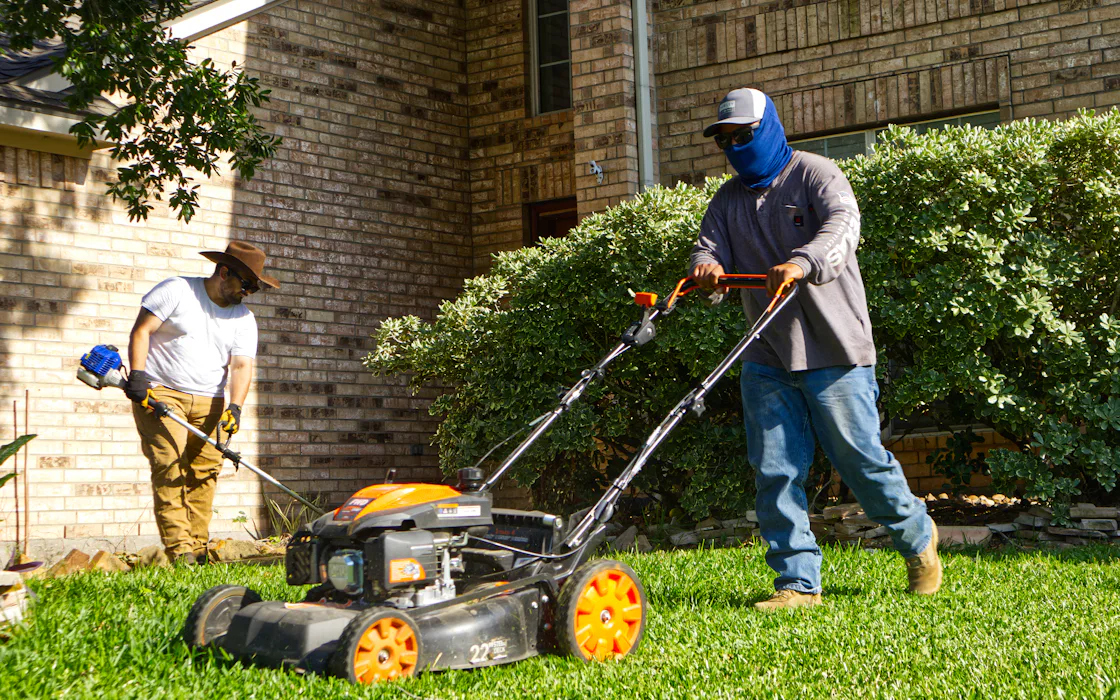
For crews Para cuadrillas
The truck leaves at 6:40. You should know that before you take the job.
You have probably been told forty hours and worked sixty, or been let go in November with two days' notice. Neither is unusual in this work. Both are things we put in writing before you start.
Le decimos la paga por hora, las horas y la temporada por escrito antes de que acepte. La entrevista, la oferta y la capacitación de seguridad están disponibles en español.
- You never pay us. Not a fee, not a deposit, not for equipment
- Rate, expected weekly hours and overtime in writing before you accept
- The real season length, including when the layoff usually falls
- Drive time in a company truck between yards is paid time
- Safety gear is the employer's, and we check that it exists before we place you
- Bilingual crew leads are paid for that skill, because it is one
- Interview accommodations arranged on request, no documentation needed
Dig safe
811 before the shovel.
Every crew we place has been briefed on calling 811 before any excavation and on what the paint on the ground means. It is free, it is federal law in practice through state one-call statutes, and the wait is usually two to three business days — which is exactly why a crew that has not been told about it will skip it.
The colors below are the APWA uniform code. They are the same in every state, and a crew that can read them is a crew that will not put a shovel through a gas line planting a hedge.
- White — proposed excavation
- Pink — temporary survey
- Red — electric
- Yellow — gas, oil, steam
- Orange — communications
- Green — sewer and drain
- Blue — potable water
- Purple — reclaimed water and irrigation
And the rest of it
- OSHA 10 for anyone we place onto a job site — Construction for hardscape and excavation, General Industry for grounds crews — arranged and paid for if they do not have it
- Chainsaw PPE checked as present and serviceable, not just asked about
- Silica controls confirmed before anyone is sent to cut concrete or block
- Trench work: nobody goes in past five feet without protective systems, and we will pull a crew over it
- Heat illness plans reviewed for any July placement, because that is when this work kills people
How it runs
The year, not the requisition.
-
November – January
The bench
We spend the off-season talking to people who are not looking yet: crews that got laid off in November, leads who are thinking about leaving, apprentices finishing a first season. Nobody is placed in December. This is the part that makes March possible.
-
Intake
We ride the route
Where the yards are, what the drive between them looks like at seven in the morning, what is on the trailer, who the lead is, what the customer complains about. Forty minutes here and we can tell whether a crew will hold or come apart in week three.
-
Week one, paid
A trial week, not a trial hour
A crew shows what it is on day four, not day one. The week is paid at the agreed rate whether or not it goes anywhere, and either side can end it without a conversation about money.
-
Through the season
We call in July
The middle of the season is when placements quietly fall apart, and it is the point everybody is too busy to raise it. So we call — the contractor and the crew, separately — in July, and again before the layoff conversation in the fall.
In their words
Both ends of the truck.
-
They called us in December, which no agency has ever done. By the second week of March we had two full crews and a lead, and we were the only outfit in town not advertising.
Owner Landscape and maintenance, eleven trucks -
The paper said the season ends in November and it actually ended in November. I had been told "year round" twice before and got sent home both times.
Crew Member, grounds Placed 2025 -
I had been translating for the whole company for four years for nothing. Curbwise put it in the offer as a skill with a number next to it.
Crew Lead Placed 2025
Questions
Asked often.
Do you really only place whole crews?
No — we place individuals too, and about a third of what we do is one person into an existing crew. The difference is that we ask who they are joining before we send anybody, because a crew has a shape and dropping the wrong person into it is worse than being short.
What does it cost?
Direct hire is a percentage of first-season pay, agreed in writing before we source anyone and payable when somebody actually starts. Seasonal crews are billed at an hourly rate that already contains payroll taxes, workers' compensation and our margin. One number, and it does not change in July.
Do crews pay anything?
No. Never, for any reason — not a placement fee, not a deposit, not for boots or a saw. Employers pay us. If somebody claiming to represent Curbwise asks you for money, it is not us: email melo@curbwisetradesnetwork.com and we will deal with it.
Do you handle H-2B?
No, and we say so early. Seasonal visa sponsorship is its own specialty with its own filing calendar and its own risks, and a staffing firm that implies it can do that casually is a firm to avoid. We staff the domestic side of the crew. If your plan depends on H-2B, you need an agent who does that and you need them in the fall.
What happens to seasonal staff in the winter?
Some move onto snow and ice, which is the same people on a different schedule. Some go to tree work, which runs through the winter. The rest we keep in touch with and place again in March, which is the entire reason we know who is available before anybody else does. We tell people honestly at intake which of those three their role is likely to be.
Can you staff a municipal or property-management contract?
Yes. Those come with their own requirements — prevailing wage on some public work, certified payroll, badge and background rules on others — and they need to be raised at intake rather than discovered at the first invoice. Tell us the contract terms and we will tell you what they mean for the crew rate.
I don't speak much English. Can I still apply?
Yes. Intake, the offer and the safety briefing are all available in Spanish, and a good share of the crews we work with run in Spanish day to day. Sí. La entrevista, la oferta de trabajo y la capacitación de seguridad están disponibles en español.
Start here
Tell us about the route.
Whichever side of this you are on, a person reads it and answers within one business day.
Puede escribirnos en español. Le respondemos en español el mismo día hábil.
Prefer email melo@curbwisetradesnetwork.com